


For centuries, the primary goal of business was clear and singular: maximize profit. This relentless pursuit of financial gain, however, has led to an unsustainable “linear economy” built on a wasteful “take, make, dispose” model. This approach has extracted a heavy toll on our planet and its people, resulting in resource depletion, staggering amounts of pollution, and a widening gap in social equity. The consequences are now undeniable, from the escalating climate crisis to a growing consumer demand for ethical products. In response, a new generation of leaders is proving that the old way of doing business is not only environmentally destructive but also economically obsolete.
These pioneers are the sustainable business model innovators. They are redefining the very purpose of a corporation, moving beyond a narrow focus on the bottom line to embrace a “triple bottom line” that equally values people, planet, and profit. This is not about sacrificing profitability for the sake of the environment; it is about recognizing that sustainability is the most powerful driver of long-term innovation, resilience, and growth. These innovators are showing the world that the most successful businesses of the future will be those that are designed to solve global challenges, not create them. This article will explore the forces driving this transformation, the core principles of sustainable business models, and the strategic roadmaps that companies can follow to build a more resilient and responsible enterprise.
The Driving Forces Behind Sustainable Innovation

The shift towards sustainable business models is not a fleeting trend but a fundamental market correction driven by a convergence of powerful forces. These forces are forcing businesses to re-evaluate their entire value chain and embed sustainability into their core strategy.
A. Evolving Consumer Demands: A new generation of consumers, particularly millennials and Gen Z, is more informed and ethically conscious than any before. They are actively seeking out brands that align with their values and are willing to pay a premium for products that are responsibly sourced, ethically produced, and environmentally friendly. This shift has created a powerful market signal that rewards purpose-driven brands and punishes those that are seen as purely profit-motivated.
B. Investor Pressure and ESG: The financial world is increasingly recognizing that environmental, social, and governance (ESG) factors are critical indicators of a company’s long-term risk and profitability. Major institutional investors and venture capital firms are now factoring a company’s sustainability performance into their investment decisions. This has created a strong financial incentive for businesses to prioritize sustainable practices, not just to attract customers, but to secure capital.
C. Regulatory and Policy Changes: Governments worldwide are implementing stricter environmental regulations, from carbon taxes and plastic bans to extended producer responsibility (EPR) laws that hold companies accountable for the entire lifecycle of their products. These policies are raising the cost of unsustainable practices and creating a more level playing field for businesses that have already adopted circular and regenerative models.
D. Resource Scarcity and Supply Chain Resilience: The linear economy’s reliance on finite raw materials is creating supply chain risks and price volatility. Sustainable business models, by prioritizing resource efficiency and the use of recycled or renewable materials, help companies build more resilient and stable supply chains that are less vulnerable to geopolitical risks and resource depletion.
Pillars of Sustainable Business Models
Sustainable business models are not just about adding a green product line; they involve a fundamental restructuring of how a company creates, delivers, and captures value. These models are built on a set of core pillars that address the economic, environmental, and social dimensions of a business.
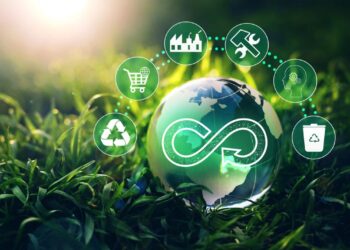
A. Circular Economy Models: The circular economy is the most prominent framework for sustainable business. It moves away from the “take, make, dispose” model to a closed-loop system where waste and pollution are designed out, products and materials are kept in use, and natural systems are regenerated. Within this pillar, several key models are emerging:
- Product-as-a-Service (PaaS): Instead of selling a product, a company sells the function of the product. The business retains ownership, incentivizing the creation of durable, modular, and long-lasting products that are easy to repair and recapture at the end of their life. Examples include Philips’ “pay-per-lux” lighting service and Michellin’s “tire as a service.”
- Resource Recovery and “Waste-to-Value”: These models transform waste from a liability into a valuable resource. Businesses can specialize in advanced recycling, turning plastic waste into new materials for manufacturing, or converting organic waste into biogas and fertilizer. This creates new revenue streams and reduces the environmental burden of landfills.
- Product Life Extension: This involves business models centered on extending the life of products through repair, remanufacturing, and resale. Companies can launch their own resale platforms or offer robust repair services, engaging with a secondary market that captures value from used products.
B. Socially Inclusive Models: A truly sustainable business model extends beyond environmental concerns to address social equity and human well-being. These models are built on principles of fairness, transparency, and community empowerment.
- Ethical and Transparent Supply Chains: This involves ensuring fair wages, safe working conditions, and ethical labor practices throughout the entire supply chain, from raw material sourcing to final product assembly. Companies use technology like blockchain to provide full transparency and traceability.
- Community Empowerment and Fair Trade: These models directly benefit the communities in which they operate. Fair trade certifications ensure that producers in developing countries receive a fair price for their goods, and a portion of the profits is reinvested in community development projects.
- Inclusive and Equitable Governance: This involves building diverse leadership teams and ensuring that social and environmental considerations are embedded in the company’s governance structure, ensuring accountability for the “people” and “planet” aspects of the triple bottom line.
C. Regenerative Business Models: Going beyond simply doing less harm, regenerative models aim to actively improve the health of ecosystems and communities. This is a higher level of sustainability that focuses on restoration and renewal.
- Regenerative Agriculture: This approach to farming focuses on reversing climate change by rebuilding soil organic matter and restoring degraded soil biodiversity. Companies that source from or invest in regenerative agriculture are not just sustaining; they are actively healing the land they rely on.
- Biodiversity Net Gain: Businesses in sectors like construction or development can design their projects to leave a positive impact on local biodiversity, for instance, by creating new habitats or restoring wetlands, rather than just mitigating their negative impact.
D. Technology-Enabled Sustainable Models: Technology is a key enabler of sustainable innovation, making circular and regenerative models more efficient and scalable than ever before.
- IoT (Internet of Things): IoT sensors can track products throughout their lifecycle, providing data on usage, maintenance needs, and optimal routes for return and recycling. This is crucial for managing PaaS and circular supply chains.
- AI and Machine Learning: AI can be used to optimize resource usage in manufacturing, predict maintenance needs to extend product lifespan, and automate sorting in recycling facilities, significantly improving efficiency.
- Blockchain: Blockchain technology provides a secure, transparent, and unchangeable record of a product’s journey, from its raw materials to its final destination. This is invaluable for verifying ethical sourcing and combating counterfeiting.
Innovators in Action

The principles of sustainable business innovation are best illustrated through the actions of companies that have put them into practice, proving that doing good can also be good for business.
- Patagonia: This outdoor apparel company is a prime example of a business built on purpose. It actively encourages customers to repair their gear rather than buying new through its “Worn Wear” program and platform. The company’s business model is centered on creating durable, long-lasting products and taking responsibility for their entire lifecycle, which has built an incredibly loyal customer base.
- Interface: As a global leader in modular carpet manufacturing, Interface has led the way in circular design. The company implemented a “Mission Zero” to eliminate its negative environmental impact by 2020. This was achieved by developing carpet tiles made from recycled materials, including discarded fishing nets, and launching a program that recaptures used tiles from customers to recycle them into new products.
- Lush Cosmetics: Lush has built a powerful brand around its ethical and environmental principles. The company’s business model is a masterclass in reducing packaging, with a large percentage of its products sold “naked” (without packaging). It also maintains an ethical buying policy and actively campaigns on issues ranging from animal testing to fair trade.
Overcoming the Challenges
The path to sustainable business innovation is not without its hurdles. Companies must be prepared to address several key challenges.
- Initial Investment: The shift to sustainable models often requires significant upfront capital investment in new materials, manufacturing processes, and logistics infrastructure.
- Consumer Education: While demand is growing, many consumers are still accustomed to the convenience of the linear model and may need to be educated on the value of a more sustainable option, such as a rental service or a remanufactured product.
- Supply Chain Complexity: Building a circular supply chain requires a reverse logistics network to collect products and materials, which is far more complex than a traditional linear supply chain.
- Scalability: It can be challenging to scale up a sustainable model to a global level, as it often requires a robust ecosystem of partners and a supportive regulatory environment.
Conclusion
The sustainable business model innovators are not just creating better products; they are pioneering a new economic system that is more resilient, more equitable, and more aligned with the long-term health of our planet. The linear “take, make, dispose” model is on borrowed time, and the businesses that continue to rely on it will be exposed to ever-increasing risks—from resource volatility and consumer backlash to regulatory penalties.
The future of business belongs to those who embrace the principles of the circular economy, social inclusion, and regeneration. These leaders recognize that solving the world’s most pressing challenges is not an expense but the single greatest business opportunity of our time. They are proving that innovation is most powerful when it is guided by a sense of purpose, and that true prosperity comes from creating a business model that benefits everyone—the company, its customers, its communities, and the planet. The journey to becoming a sustainable innovator is a complex one, requiring vision, courage, and a commitment to continuous improvement. But for those who embark on it, the reward is not just financial success, but the honor of building a legacy that will help create a more sustainable, equitable, and vibrant future for generations to come.



Discussion about this post