


For over a century, the global economy has operated on a linear model: “take, make, dispose.” Raw materials are extracted, transformed into products, sold to consumers, and ultimately discarded as waste. This model, which fueled the industrial revolution and mass consumption, is no longer sustainable. It relies on a finite supply of resources, generates immense pollution, and creates economic fragility through volatile commodity prices. The mounting pressures of climate change, resource scarcity, and growing consumer demand for ethical products have exposed the critical flaws in this system.
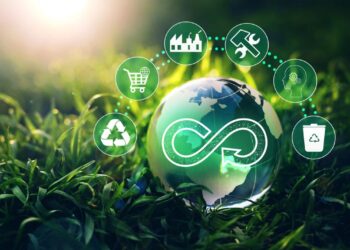
In response, a new economic paradigm is emerging: the circular economy. This model is a fundamental shift from a linear, wasteful process to a regenerative and restorative one. Its core principle is to design out waste and pollution, keep products and materials in use, and regenerate natural systems. Far from being a niche concept or an idealistic endeavor, the circular economy represents one of the most significant business opportunities of the 21st century. It is a framework for innovation that promises not only environmental resilience but also new revenue streams, enhanced brand loyalty, and long-term economic stability. This article will delve into the core principles of the circular economy, explore the most promising business models, and outline the strategic advantages for companies that are ready to transition from a linear to a circular future.
What is the Circular Economy?

Before diving into the opportunities, it’s essential to grasp the core concepts of the circular economy. The traditional linear model is a straight line: resource extraction, manufacturing, distribution, use, and disposal. In contrast, the circular economy is a loop, mimicking the way natural ecosystems function. In nature, waste from one process becomes a valuable input for another. This model is based on three foundational principles, as defined by the Ellen MacArthur Foundation:
- Design out Waste and Pollution: This principle addresses waste and pollution at the source. Products and processes are designed from the ground up to prevent waste from being created in the first place. This includes using non-toxic, bio-based materials and creating products that are easy to disassemble and recycle.
- Keep Products and Materials in Use: This is the heart of the circular model. It focuses on extending the life of products and components for as long as possible. This is achieved through strategies like reuse, repair, refurbishment, and remanufacturing. When a product can no longer be used, its materials are recovered and recycled to create new products.
- Regenerate Natural Systems: Beyond simply minimizing harm, a circular economy aims to actively improve the environment. This means using materials and processes that regenerate, rather than degrade, natural capital. Examples include regenerative agriculture and using renewable energy sources throughout the supply chain.
By embracing these principles, businesses can decouple economic growth from the consumption of finite resources. This is a strategic imperative in a world facing increasing resource scarcity and environmental regulation.
The Economic and Strategic Imperative
The business case for the circular economy is no longer just about corporate social responsibility; it is about long-term profitability and competitive advantage. The transition to a circular model provides powerful solutions to some of the biggest challenges facing modern businesses.
A. Mitigating Resource Risk: Global supply chains are increasingly vulnerable to price volatility and the geopolitical risks associated with raw material extraction. By reusing, recycling, and remanufacturing materials, companies can reduce their dependence on virgin resources, leading to more stable and resilient supply chains. This provides a hedge against commodity price fluctuations and supply shortages.
B. Creating New Revenue Streams: Waste is an untapped resource. Companies that can find ways to recover value from waste streams or to sell “products as a service” are opening up entirely new markets. This transforms what was once a cost center (waste disposal) into a profit center (resource recovery and new product offerings).
C. Meeting Consumer Demand: A growing segment of consumers, particularly younger generations, are making purchasing decisions based on sustainability and ethical practices. They are willing to pay a premium for eco-friendly products and support brands that align with their values. Adopting a circular model is a powerful way to build brand loyalty, attract new customers, and differentiate from competitors.
D. Enhancing Regulatory Compliance: Governments worldwide are introducing stricter environmental regulations, including extended producer responsibility (EPR) laws that hold companies accountable for the entire lifecycle of their products. By proactively embracing circular principles, businesses can get ahead of these regulations, avoid hefty fines, and position themselves as industry leaders.
Key Business Models for a Circular Future
The circular economy is not a one-size-fits-all solution. Instead, it is a collection of innovative business models that can be adapted to different industries and products.
A. Circular Supplies: This model focuses on replacing virgin, single-use materials with fully renewable, recyclable, or biodegradable inputs. Businesses that produce or use these materials can significantly reduce their environmental footprint and build more resilient supply chains. Examples include using recycled ocean plastic for clothing, bio-based plastics for packaging, and regenerative agriculture to source food products.
B. Product-as-a-Service (PaaS): Instead of selling a physical product, companies sell the function or performance of that product. The company retains ownership of the product, making it their responsibility to maintain, repair, and ultimately recapture the materials at the end of its life. This incentivizes the creation of durable, modular, and long-lasting products. A classic example is Philips’ “Pay-per-Lux” lighting service, where customers pay for light, not for the light bulbs themselves, which Philips then maintains and recycles. Michelin’s “tire as a service” for trucking fleets is another prime example.
C. Product Life Extension: This model centers on prolonging the useful life of products and components through a variety of strategies.
* Repair and Maintenance: Offering robust repair services and making products easy to fix can extend their lifespan, reducing the need for new production. This is a growing market for electronics and appliances.
* Remanufacturing and Refurbishment: This involves taking a used product, restoring it to “like-new” condition, and reselling it. This is a highly profitable model in sectors like electronics, machinery, and automotive parts, where the core components retain significant value.
* Resale and Second-Hand: Platforms that facilitate the buying and selling of pre-owned goods are a cornerstone of the circular economy. Companies can launch their own resale platforms, as Patagonia has done with “Worn Wear,” to capture a share of the resale market and create a new revenue stream.
D. Resource Recovery: This model focuses on recovering materials and energy from products that have reached the end of their useful life. Waste is no longer seen as a liability but as a valuable resource. Businesses can specialize in advanced recycling, chemical recycling to break down plastics, or turning organic waste into biogas and compost. This “waste-to-value” approach creates a new resource loop and diverts millions of tons of material from landfills.
E. Sharing Platforms: In a world where many products are used for only a fraction of their lifespan, sharing platforms provide a powerful solution. They allow users to share access to products—from power tools and cars to clothing and living spaces—rather than owning them. This reduces the overall number of new products that need to be produced, promoting resource efficiency and creating a new service-based economy.
Sector-Specific Opportunities

The circular economy’s potential is not confined to a single sector; it can be applied to virtually every industry, with some offering particularly fertile ground for innovation.
- Fashion and Textiles: The fast fashion industry is notorious for its linear model and high environmental cost. The circular economy offers opportunities in using recycled fibers (e.g., from old plastic bottles or used clothing), launching rental and subscription services for clothing, and developing robust resale marketplaces.
- Electronics: E-waste is a massive global problem. The circular economy provides a roadmap for this sector through modular product design that makes components easy to repair or upgrade, professional refurbishment services for smartphones and laptops, and advanced material recovery processes to extract valuable metals and rare earth elements from discarded devices.
- Construction and Built Environment: The construction industry is a major consumer of raw materials and a huge generator of waste. Circular opportunities include using recycled demolition waste for new concrete, designing buildings for disassembly so that materials can be reused at the end of their life, and launching platforms for trading surplus construction materials.
- Food and Agriculture: The food system is highly inefficient. A circular approach focuses on reducing food waste, turning food scraps into compost or energy, and adopting regenerative agriculture practices that restore soil health and biodiversity.
The Role of Technology and Policy in Accelerating the Transition
The shift to a circular economy is not just about changing business models; it is also about leveraging new technologies and receiving support from forward-thinking policies.
- Technology: New technologies are making circular models more feasible and profitable. Internet of Things (IoT) sensors can track the location and condition of products, enabling companies to monitor a product-as-a-service asset or to optimize a product’s return journey for remanufacturing. AI and machine learning can optimize sorting and recycling processes, while blockchain can provide supply chain transparency, allowing consumers to verify the recycled content in a product.
- Policy and Regulation: Governments are playing a crucial role by setting the rules of the game. Policies like mandatory EPR, bans on single-use plastics, and financial incentives for sustainable practices are creating a level playing field and encouraging companies to invest in circular solutions. The right policies can de-risk innovation and make circular business models more competitive than their linear counterparts.
Overcoming the Challenges
Despite the clear opportunities, the transition to a circular economy is not without its hurdles. Businesses must be prepared to address several key challenges.
- Initial Investment: The shift from a linear to a circular model often requires significant upfront capital investment in new manufacturing processes, logistics infrastructure, and technology. The return on investment may not be immediate, requiring a long-term strategic vision.
- Changing Consumer Behavior: While consumer demand for sustainability is growing, many people are still accustomed to the convenience and low cost of disposable products. Companies must invest in marketing and education to help consumers understand the value of circular products and services, such as a subscription to a product or a remanufactured item.
- Supply Chain Complexity: Building a circular supply chain is more complex than a linear one. It requires a reverse logistics network to collect products and materials, and a new set of partners for repair, recycling, and remanufacturing. Managing this complexity requires sophisticated data management and operational excellence.
- Lack of Standardized Infrastructure: In many regions, the infrastructure for collection, sorting, and advanced recycling of materials is underdeveloped. This can be a major barrier to implementing resource recovery models and can limit the scale of circular operations.
Conclusion
The circular economy is a profound and necessary evolution of our economic system. It is a powerful framework for decoupling growth from environmental degradation and building a more resilient, profitable, and equitable future. The companies that are embracing this paradigm shift are no longer just thinking about how to reduce waste; they are thinking about how to eliminate it entirely and create value from what was once discarded.
This transition from a linear to a circular model is not a small adjustment—it is a comprehensive strategic undertaking that touches every part of the business, from design and procurement to manufacturing, logistics, and customer service. It requires innovation in business models, investment in new technologies, and a fundamental change in corporate culture. The opportunities are vast and varied, ranging from the development of advanced recycling technologies to the creation of subscription-based services that prioritize longevity and repair over disposal.
In the end, the circular economy is more than just a buzzword; it is the blueprint for a more sustainable and prosperous future. The businesses that lead this transformation will not only build stronger, more resilient operations but will also be the architects of a new economy where profitability and planetary health are not mutually exclusive but deeply intertwined. The time for action is now, and for those with the vision and foresight to embrace it, the circular economy promises a world of limitless opportunities.





Discussion about this post